

The strategic arena of East Asia.
SINCE THE END OF THE COLD WAR, American naval supremacy has been unchallenged throughout the world. Even during that massive, global struggle, the Soviet Navy never came close to rivaling the power projection capabilities of the United States (of course, this was never their intent).
With the dawning of the twenty-first century, however, many commentators are declaring it to be “China’s Century,” during which the People’s Republic will finally assume its rightful place as a counterweight to the United States. Despite the financial crisis currently engulfing the world, the U.S.-China trade deficit reached record levels in 2008, with $266 billion against the United States. If the economic sphere were a battlefield, China would surely be winning.
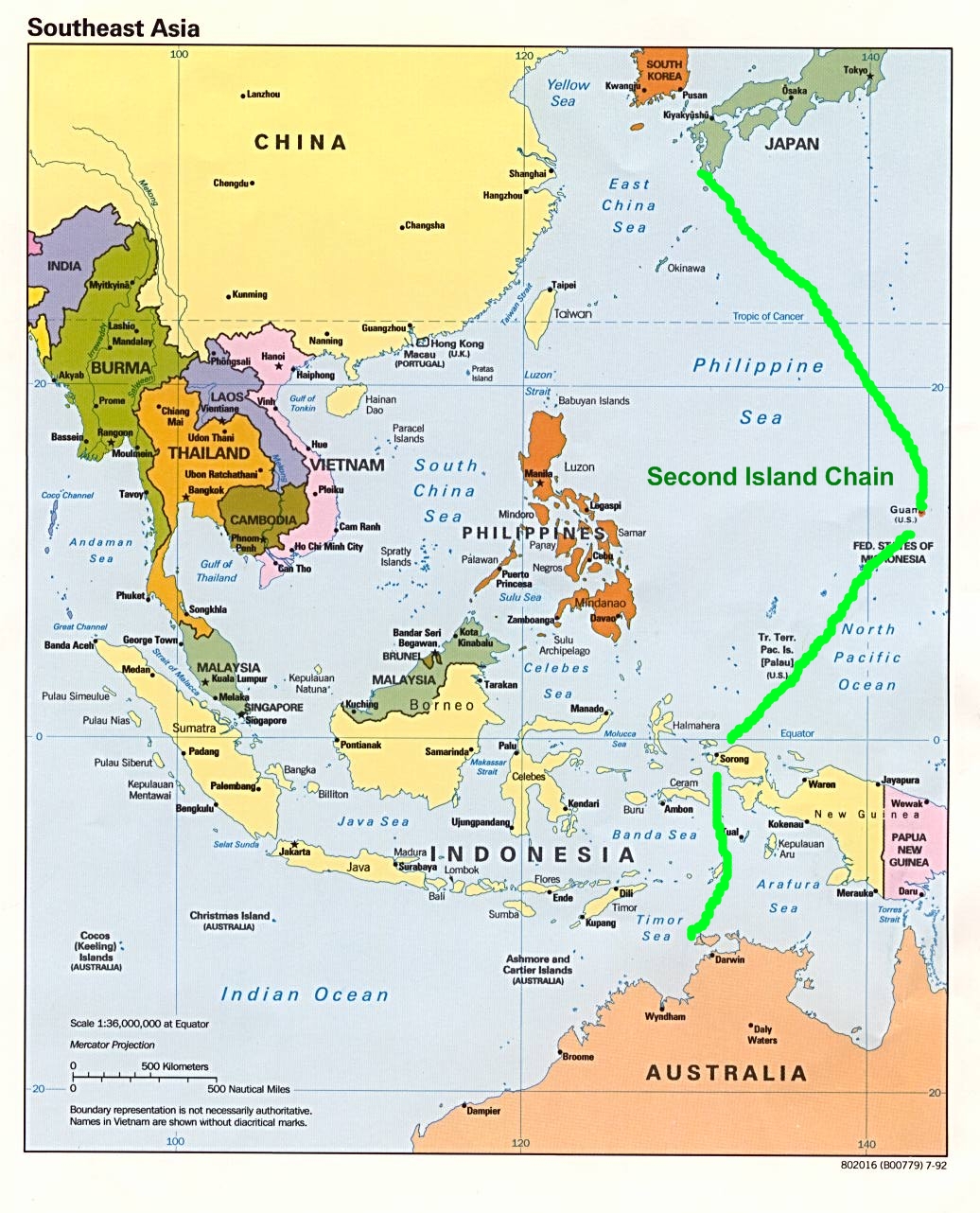
Yet, the crucial trade arena formed by the South China Sea, East China Sea, Yellow Sea, and Western Pacific Rim has gone largely ignored in China as an area of vital strategic importance. Half of the largest container lines in the world are owned and based in Asia, and one-third of the world’s shipping is owned by Asian nations.[1]
It would make sense, then, for China to possess and deploy a strong navy. Since the Communist victory over the Kuomintang (KMT) in 1949, maritime power has been neglected, but the last decade has seen an ascendant navalist faction in the upper echelons of the Politburo. China has now embarked upon a major program of modernizing the People’s Liberation Army Navy (PLAN), and while American superiority in the region is likely to remain for the near future, the rise of the PLAN will pose significant challenges to the United States Navy in decades to come.
While recent history would indicate otherwise, China has a long and storied naval heritage.


 Automatic Ballpoint