For Love of Country, Part II

Part 2 of a 5-part series.

The Sepoy Mutiny of 1857 can be attributed to many factors, but foremost was the British persistence in attempting to alter the traditional culture of India, particularly the ‘civilizing’ efforts of modernizers and evangelical Christian missionaries.

Sati (Suttee) in practice

The three practices of female infanticide, thagi (a supposed cult of assassin-priest highwaymen), and sati (ritual self-immolation by a widow) were the most heinous in the eyes of British. While these attempts at eradication did not even enjoy the pretense of East India Company legitimacy, it was nevertheless believed by many Indians that every Briton had come to stamp out Hinduism and Islam alike.

Continue reading

For Love of Country, Part I

Part 1 of 5. Adapted from “For Love of Country? Britain, France, and the Imperial Multiethnic Army, 1815-1919.”
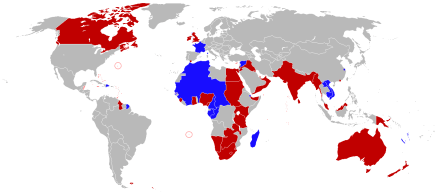
The British and French Empires at their greatest territorial extents (British in red, French in blue).

AT THE HEIGHT OF EMPIRE, nearly thirty percent of the peoples of the world and more than a third of its surface area were controlled by only two nations. The United Kingdom of Great Britain and Northern Ireland ruled a quarter of the earth’s population and a quarter of its landmass. As the saying went, “the sun never sets on the British Empire,” and indeed, for nearly two hundred years it never did.

By far the most expansive and successful empire in history, Britain consolidated and expanded its holdings through wars of conquest and a military might unmatched by any other power on the planet. Britain was not the only globe-spanning empire, though. France controlled much of Africa (to an even greater extent than Britain), as well as holdings in Indochina, the Middle East, and the Caribbean.

French and British Empires alike were kept in power by the violent repression of rebellions, mutinies, and ‘uprisings’. In large part, however, the armies participating in the repression were not composed of all-white formations. The sheer size and scope of the global empires required the imperial powers to recruit heavily from among local populations, and the manpower demands of the two world wars necessitated their deployment to the Western Front.

In many cases, the colonial troops performed even better than their European counterparts. The French Tirailleurs Sénégalaise in particular enjoyed a widespread reputation after the war as both peaceful and respected occupation forces, and as daring and highly successful soldiers. Many other French colonial troops garnered equal praise. The British ANZAC and colonial troops also earned warm words for their bravery (Erwin Rommel was quoted as saying, “If I had to take Hell, I would use the Australians to take it and the New Zealanders to hold it”).

It is no exaggeration to state that both French and British Empires alike were founded on the backs of the native populations. But this went beyond local labor forces and resource extraction.

Continue reading

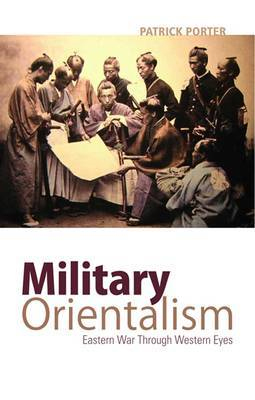
Military Orientalism: A Review

Patrick Porter’s Military Orientalism provides an excellent analysis of the recent culturally-focused bent within western military thinking. “It is not a question of whether culture matters,” writes Porter, “but how it matters, and how to conceptualise [sic] it.” This is expressed through several case studies: British perceptions and accounts of the Russo-Japanese War, interwar military thinking and the “lessons” of Ghengis Khan (particularly as expressed by Basil Liddell Hart), the United States and the Taliban in Afghanistan, and finally Israel’s experience in the 2006 Lebanon War.

Continue reading

Why They Fight

They hate us because we don’t know why they hate us.” The perceived ignorance of Americans as to the wider world around them was often cited as a compelling reason for the mass murder of several thousand citizens on September 11, 2001. Low scores on math and science, and the inability of two-thirds of Americans between eighteen and twenty-four years old to locate Iraq on a map in 2006 merely perpetuated this claim; that somehow American geographical ignorance is responsible for jihadists and regional strife around the world.

This is of course not the only suggested explanation for conflict in the developing world. Essentially, all the arguments put forth can be summarized as pertaining to ‘greed’, or monetary and personal gain, and ‘grievance’, i.e., ideological and cultural clashes. Abridging the vast array of motives to these two is oversimplifying the matter to begin with; further choosing one of the two as the sole factor would be downright spurious. Complicating matters is the tendency to use the ‘pre-modern’ character of third world conflicts to build an intellectual bridge back to the very beginning of history. Continue reading