Rise and Fall of the Great Powers: A Review

The Rise and Fall of the Great Powers is one of those magisterial overviews of five centuries of world history. Paul Kennedy does a very good job and takes a quasi-Marxian approach to this, in that economics do in large part determine the trajectory of nations (e.g., a materialist explanation). The macroeconomic state of a nation – its accounts payable, its gross national product, its collective receipts – are, to Kennedy, inextricably linked to its place on the world stage. The correlation is obvious, but is the causation there?

While Kennedy admits that earlier history is not his area of expertise, he does a decent job explaining how the “East” fell behind, given the increasing insularity of Ming China and the internecine struggles in South and East Asia that consumed resources and attention. It’s not a wholly convincing explanation but other historians have done a fairly good job examining this; I am reminded mainly of Kenneth Pomeranz’s alternate history essay in Unmaking the West , “Without Coal? Colonies? Calculus?: Counterfactuals and Industrialization in Europe and China.” (One of Pomeranz’s points is that in the United Kingdom, coal deposits were mined in relatively close proximity to waterways and also the metropole; in China, much of the coal is to be found far in the northwest hinterlands, far away from a means of transportation and major population centers.) In Kennedy’s telling, it is the governance failures of China and the Mughals – and in the case of the latter, an increasingly rapacious program of taxation, offering nothing by way of return to the tax base – coupled with a lack of industrialization that can explain their relative early fall.

Kennedy has written a remarkable qualitative history based on ballpark quantitative statistics, which is an approach I can very much get behind. Relative national “incomes” in the seventeenth century, for instance, are exceedingly difficult to find data for, much less calculate (part of the reason Piketty’s Capital in the Twenty-First Century was so celebrated was its painstaking collection and analysis of detailed financial records dating back centuries – one of the first times it had been done). And yet Kennedy manages to paint a convincing picture of ebbs and flows in currencies and commodities, in relative power balances and military expenditures, tracing continuities in national approaches towards almost the present day.

It is here, on the doorstep of the present, that perhaps reviewers have, with the benefit of hindsight, come to blame Kennedy for his failure of prescience. Indeed, he comes close to an accurate prediction in terms of the overall trajectory of Russia, but in the specifics (i.e., the collapse of the Soviet Union), he just misses the mark:

On the other hand, the Soviet war machine also has its own weaknesses and problems … Since the dilemmas which face the strategy-makers of the other large Powers of the globe are also being pointed out in this chapter, it is only proper to draw attention to the great variety of difficulties confronting Russia’s military-political leadership – without, however, jumpting to the opposite conclusion that the Soviet Union is therefore unlikely to ‘survive’ for very long. [Emphasis in original]

Kennedy was writing in 1987, just two years before the overthrow of Communism in much of eastern Europe, and four before the dissolution of the Soviet Union itself. But despite failing to predict its collapse, he nevertheless successfully identified a downwards socioeconomic and geopolitical trajectory for Russia that has since been proven accurate. Similarly, Kennedy’s prognosis for the United States seems, especially now, to have been borne out, almost frighteningly so:

Although the United States is at present still in a class of its own economically and perhaps even militarily, it cannot avoid confronting the two great tests which challenge the longevity of every major power that occupies the ‘number one’ problem in world affairs: whether, in the military/strategical realm, it can preserve a reasonable balance between the nation’s perceived defense requirements and the means it possesses to maintain those commitments; and whether, as an intimately related point, it can preserve the technological and economic bases of its power from relative erosion in the face of the ever-shifting patterns of global production. This test of American abilities will be the greater because it…is the inheritor of a vast array of strategical commitments had been made decades earlier … In consequence, the United States now runs the risk, so familiar to historians of the rise and fall of previous Great Powers, of what roughly might be called ‘imperial overstretch’.

And though he never quite describes it as a future strategic competitor (and, to be fair, it is only in the past fifteen years that the contours of Sino-American relations have really begun to solidify), it is clear to Kennedy that the eventual rise of China is perpetually lurking in the background. “The most decisive” international fissure of the Cold War, he writes, “was the split between the USSR and Communist China,” which served to make even that era less of a totally bipolar system than is typically conceived of. China is one of five extant or emerging power centers he identifies, and sees a gradually strengthening power with some of the highest growth rates on Earth – this towards the tail end of Deng’s rule, before it really took off.

And so, what then for the United States? In keeping with his theme of “imperial overstretch,” Kennedy points out that the United States in 1987 had “roughly the same massive array of military obligations across the globe as it had a quarter-century [prior], when its shares of world GNP, manufacturing production, military spending, and armed forces personnel were so much larger.” All the military services will inevitably demand more resources and cry poverty, yes, but that is because what passes for American “statecraft” in the 21st century manages to avoid any hard decisions, any downscaling of commitments, and any meaningful reassessment of available ways and means – with an eye towards determining commensurate ends.

Here again, Kennedy is prescient: “an American polity which responds to external challenges by increasing defense expenditures and reacts to the budgetary crisis by slashing the existing social expenditures, may run the risk of provoking an eventual political backlash.” We’ve almost certainly watched that unfold in the years since 2001. In keeping with the rest of Rise and Fall, the United States is in fact headed for decline, but in a relative sense, one that is manageable if approached reasonably. This doesn’t single out the country; instead it might be seen (and is by Kennedy) as a reversion to the mean:

It may be argued that the geographical extent, population, and resources of the United States suggest that it ought to possess perhaps 16 or 18 percent of the world’s wealth and power, but because of historical and technical circumstances favorable to it, that share rose to 40 percent or more by 1945; and what we are witnessing at the moment is the early decades of the ebbing away from that extraordinarily high figure to a more ‘natural’ share.

Kennedy also offers a warning: “the task facing American statesmen over the next decades, therefore…is a need to ‘manage’ affairs to that the relative erosion of the United States’ position takes place slowly and smoothly, and is not accelerated by policies which bring merely short-term advantage but longer-term disadvantage.” This is wise counsel for the years ahead, as the unipolar moment continues to rapidly fade. But if this is the predominant challenge to the United States in the 21st century – a superpower in decline – than so far we have surely failed to meet it.

Make Do and Mend in the Royal Navy

An interesting pair of posts popped up in my reader almost simultaneously. The first is from Naval Gazing, on the logistics workup early on in the Falklands War:

In a meeting on March 31st, two days before the invasion, the Defense Secretary, John Nott, suggested that it would take five months to muster a task force … The First Sea Lord, Admiral Henry Leach, disagreed. He not only convinced Prime Minister Thatcher that it was possible to recapture the islands, but also promised that he could have a task force ready to go within a week.

This was an incredible claim. Britain had only two carriers, the WWII-vintage HMS Hermes and the new HMS Invincible. They had recently returned from a major exercise, and Hermes was in week two of a six-week stint in the yards, while Invincible’s crew was on leave. One of the two British LPDs, HMS Intrepid, was only weeks away from decommissioning, and her crew had already been dispersed throughout the fleet. All available personnel were immediately put to work, buttoning up Hermes and loading the ships due to go south.

This was a herculean task … Everything for the campaign had to be aboard before they left – food, fuel, and the thousands of items of supplies that make a modern war machine run. … The situation was so desperate that cleanup of the the pile of discarded packing material on the wharves didn’t start for two weeks … Finally, on April 5th, Hermes and Invincible cast off. Hermes’ deck was crowded with Harriers and Sea Kings as she made her way past the cheering spectators. This was not primarily for the spectacle. There was nowhere to put them belowdecks, as the hangar was being used to sort supplies, which had been coming aboard until the gangplanks were withdrawn, and the island had been cloaked in scaffolding a bare day before.

…Perhaps the most impressive case is that of RFA Stromness. She had been placed in reserve before the crisis, and on April 2nd, she was in dock, completely destored and with only a care and maintenance crew aboard. On April 7th, she sailed for Ascension, fully stored, with 358 Marines and a month’s worth of rations for 7,500 men. Much of this work, particularly at Chatham and Gibraltar, was performed by men who had already received their redundancy notices in preparation for the closure of the yards.

In other words, from near-nothingness, the Royal Navy was able to equip and sail a sizable out-of-area naval task force 5,000 miles down the Atlantic in 1982.

The other piece was from “Humphrey” of Thin Pinstriped Line, on “The Utter Pointlessness of Reserve Fleets“:

Forcing a policy of keeping ships in reserve raises difficult questions about how they are supplied, and whether to run on contracts and stores of equipment to be held in readiness to put on them. Were you to reactivate a Type 23, then there will probably be no spare parts in the chain to fit to her. When these parts include minor systems like missile launchers and fire control radars, you quickly realise that a reactivated frigate will be practically defenceless…

For the MOD keeping a reserve force of older Type 23s raises difficult questions … As the Type 23 force reduces, finding spare parts to keep them ready for sea is going to be harder and harder. Reactivating them will require spending money the MOD hasn’t got now on the off chance that they may be needed for sea later.

The problem of material becomes even more challenging when you consider how you maintain enough stocks of munitions and IT systems for a reactivation. Modern munitions are incredibly complex pieces of machinery, designed to do a very specific role and requiring a lot of time and effort to design and support them.

In the 1970s it was significantly easier to bring a ship out of reserve into service when the main armament of many of the Standby Squadron ships was usually some form of light gun (4.5” down to 20mm) and the RN still had a substantial stores depot network filled with legacy equipment, often dating back to well before WW2. For example it was a relatively easy matter to add on additional 40mm Bofors mounts that were manufactured during WW2 to ships going to the Falklands conflict.

Today modern RN does not have stores depots full of legacy weapons. The munitions stockpile does not have vast depots filled with equipment dumped and forgotten about for decades that can be pulled out in a crisis.. There are not random crates of long forgotten dusty VLS seawolf missiles lurking in the back of a tunnel in Copenacre. Modern missiles require care and maintenance, which in turn needs a complex supply chain and support contracts to keep going

Similarly, unlike in the 1960s and 70s where ships were fundamentally very similar to their WW2 era counterparts, modern vessels are built around computer networks and combat systems. These require regular maintenance and upgrading to ensure they are credible. Any ship in reserve is going to either require a lot of work to bring them up to speed and make them compatible with the rest of the Fleet, or it will be required to sail without the essential equipment able to help it fight.

Obviously technology has come a ways since the 1980s, but this seems like more of a surrender than continued development would necessarily warrant. Perhaps the difference here lies in the degree of capability the UK might potentially seek to get out of any mothballed surface combatants – while the Type 21s and County-class destroyers of the Falklands-era Royal Navy were designed with relatively rudimentary guided munitions platforms (and digital CICs), it was only their successors that were designed around VLS tubes, ASM countermeasures, and ASMs of their own.

The older ships revived for the sake of the Falklands crisis were clearly no match for the majority of modern platforms in 2018. Nevertheless, in a high-intensity conflict against a relatively low-tech adversary, it might be worth considering whether the juice is indeed never worth the squeeze, or if, in fact, some additional degree of lower-end capability is still a net and worthwhile gain. Humphrey himself looked at the Type 22 frigates on the eve of their premature scrapping and concluded that the challenges associated in preserving any ability to restore them were overwhelming.

This is, of course, a separate issue from the Royal Navy’s struggles with adequate manning, but that is even more pressing, and I’m not sure what the solution to that – is barring any significant changes to UK defense spending and indeed, overall economic performance, not to mention global threat perceptions.

An Empire, If You Can Keep It

If the Paul Kennedy school of history is accurate (and in case it isn’t obvious, I’m currently making my way through The Rise and Fall of the Great Powers), then, essentially, economic power that could correlate to military power is one of the dominant characteristics of Great Powers through the ages. As long as it remains fungible, military potential backed by a strong economy is one of the surest markers of “Great Power” status.

But what happens when the two diverge? The United Provinces of the Netherlands come to mind as a predominantly economic power that gradually waned – for all its market innovations, there were eventual limits to its naval power (and it was, of course, perpetually vulnerable by land) – and perhaps the decline of Bourbon Spain, although its regression came both in economic and military prowess. Kennedy’s point is that the key lies not in absolute measures, but in relative ones, and so while these never became “poor” countries, per se, their neighbors and other rivals managed to grow more.

Which brings us to modern Germany: a paper tiger (or, as national emblems might have it, a paper leopard). Germany’s economy is, by all accounts, in pretty good shape, and certainly better than much of the rest of the West. And yet its military is decrepit, in worse shape than even the US Navy’s 7th Fleet. As Stars and Stripes reports:

New German capability gaps have been brought to light in recent weeks, piling up on top of old ones that Berlin has failed to fix.

Among the failures: none of Germany’s submarines is operational, only four of its 128 Eurofighter jets are combat-ready and the army is short dozens of tanks and armored vehicles needed for NATO missions.

In addition, troops are short on the basics: body armor, night vision gear and cold-weather clothing.

The situation is so dire that 19 helicopter pilots from Germany’s Bundeswehr were forced to turn in their flight licenses because of a lack of training time.

The reason: not enough helicopters for the pilots to fly.

Much like Japan’s “economic miracle,” protected solely by minimal “self-defense forces,” Germany has exchanged even the prospect of hard power for economic stability. But such a situation is likely untenable. It pains me to say it, but Ross Douthat wrote a decent piece in the Times.

The third German empire is a different animal altogether. Repudiating both militarism and racist mysticism, it has been built slowly and painstakingly across three generations, in cooperation with other powers (including its old enemies the French), using a mix of democratic and bureaucratic means. Today Germany bestrides its Continent, but German power is wielded softly, indirectly, implicitly — and when the fist is required, it takes the form of fiscal ultimatums, not military bluster or racial irredentism.

But still the system is effectively imperial in many ways, with power brokers in Berlin and Brussels wielding not-exactly-democratic authority over a polyglot, multiethnic, multireligious sprawl of semi-sovereign nation-states. And thinking about the European Union this way, as a Germanic empire as well as a liberal-cosmopolitan project, is a helpful way of understanding how it might ultimately fall.

Obviously, this oversimplifies – and exaggerates – the powers that Brussels holds. But it’s true that Germany has a…unique approach to fiscal policy, one at odds with most of the rest of the EU, and which nevertheless is one that’s been imposed on the other member-states. And ironically, that’s despite its relative military weakness, not because of it (although perhaps this dynamic is less surprising within the framework of the Atlantic alliance).

In so many multiethnic empires and society, the institution bridging ethnic, racial, and religious divides tends to be the military. It’s often when those forces collapse or disintegrate that so too do the borders of a Yugoslavia or an Austria-Hungary. Perhaps, if Germany continues to subtly insist on a continental economic mastery, it would do well to rebuild its own military institutions. And as long as it continues to lead the EU, turning the Eurocorps into something resembling, well, a corps might restart the long-stalled process of integration in more than a purely fiscal sense.

Germany can and will remain European, but if Berlin wants everyone else to identify as such, too, it will have to build more multilateral institutions than merely that of financial austerity.

Individual Limits

Nils Gilman has a great review essay in the LA Review of Books on Samuel Moyn’s Not Enough: Human Rights in an Unequal World, and it’s definitely worth your time.

In short, Moyn’s book traces the parallel development – at least from a rhetorical perspective – of “human rights” coupled with the language of “individual freedoms” associated with neoliberalism as a political project. Or, in Gilman’s words:

The book takes the form of an intervention into two huge historical debates, the first about the history of neoliberalism and the second about the history of human rights, a field whose current contours Moyn helped to define with his 2010 book The Last Utopia: Human Rights in History. The puzzle he seeks to explain is: How is it that the era of neoliberalism, commonly said to have begun in the mid-to-late 1970s, coincides almost perfectly with the triumphant rise of a discourse of human rights? In other words, how can it be that an era whose ethical self-conception was rooted in a transnational movement to prevent abuses such as torture, disenfranchisement, and political imprisonment has also been an era in which national and global economies were remade in ways that have allowed wealthy capital owners to capture the large majority of economic productivity gains, creating in-country inequalities not seen since the late 19th century?

Like many books of this nature, however, where it comes up a little short is in the realm of recommendations. Which isn’t to say every accurate diagnosis requires a treatment as well – in many (if not most) cases, the remedies are obvious and what’s lacking is political will – but the proliferation of this particular vocabulary throughout the establishment is pernicious, and lends itself to certain mindsets that would likely be difficult to shift.

If individual freedoms – and mostly freedoms to, rather than freedoms from – are the essential building blocks of modernity, how then to advance a project predicated on finally meeting more than just basic needs as a matter of due course, of restoring egalitarianism to the world stage on a massive scale? As Gilman explains it, even just conceiving of a way to address this will require a tremendous shift in the realm of the imaginable:

…In a globally integrated economy, only a global-scale regulatory entity has a serious chance to tame the power of global capital. In short, if the re-autarkization of national economies, as proposed by some nationalists and populists, is to be avoided, we may wish to revisit another largely forgotten intellectual episode from the protean postwar moment of the 1940s — namely, the idea of a world government.

To propose the idea of a planetary-scale state, in a time of backlashes against globalization and surging populist nationalisms, may seem less a utopian delusion than a form of political madness. To date, as Moyn himself notes, “there has been no serious erosion of the assumption that states are on their own to fulfill the economic and social rights of their citizens. […] [I]n the neoliberal age, international law furnished no redistributive tools among states, and few activists or governments tried to build them.” But we live in a time of collapsing political limits, and many things that seemed impossible or inconceivable just a few years ago have been achieved or surpassed. Who is to say that the future may not belong to a world state? Indeed, as hard as it is to imagine how such a state might come into existence, it may be even harder to imagine how the world’s immense demographic, environmental, and political challenges can possibly be addressed without one.

The hardest part, and the one that involves the deepest uprooting of American sentiments, is getting away from the cult of individuality and rediscovering the power of collective demands. An individual right is, in many ways, no right at all; it is the right to imagine a better future without securing one; the prohibition on Anatole France’s rich and poor alike to sleep under bridges; the right to express as loudly as you like how unjust the world is – but not to actually see any remedy.

I’ll have more to say on this later, but given the radical challenges facing us (and the utter failures of incrementalism on display in the past few years), it is telling that a clear-eyed assessment of the situation leads almost inexorably to solutions that, until only the past few years, were inconceivable. The current state of international political economy requires profound change if we are all to survive.

Anyways, read Gilman’s essay (and Moyn’s book)!

The Self-Inflicted Myth of Omnipotent Russia

5899297552_c04cdaf7dd_b[1]

One of many examples of the Russian/Soviet octopus in art, its tentacles implying a dominion it possesses anything but.

If you haven’t yet had a chance to read Keith Gessen’s terrific article on the “Russia hands” of the US foreign policy establishment, do yourself a favor and switch over to it right now.

The abiding mystery of American policy toward Russia over the past 25 years can be put this way: Each administration has come into office with a stated commitment to improving relations with its former Cold War adversary, and each has failed in remarkably similar ways. The Bill Clinton years ended with a near-catastrophic standoff over Kosovo, the George W. Bush years with the Russian bombing of Georgia and the Obama years with the Russian annexation of Crimea and the hacking operation to influence the American election.

Some Russia observers argue that this pattern of failure is a result of Russian intransigence and revisionism. But others believe that the intransigent and unchanging one in the relationship is the United States — that the country has never gotten past the idea that it “won” the Cold War and therefore needs to spread, at all costs, the American way of life.

Since the end of the Cold War, the United States has done a very poor job of extending anything like a hand to a fallen opponent. For all the hopeful talk of “a Marshall Plan for Russia,” all that the West seemed to offer the former Soviet Union was a path to privatization, deprivation, and the extreme enrichment of a few oligarchs, while at the same time picking off what was once considered the periphery of a millennia-old empire.

Unlike with other countries – say, China, which presents probably the most extensive security challenge to the west in the next few decades – there is a lack of nuanced discussion, or indeed even debate at all. In most quarters, Russia is an omnipotent boogeyman, “the bear awakened,” America’s arch-nemesis with whom no cooperation is possible. Even the mere suggestion that Russia and the United States might enjoy a shared interest or two is met with incredulity if not outright hostility.

Gessen does a fantastic job of comprehensively mapping the “breadth” of thought on Russia throughout the American national security apparatus, and it’s worth quoting extensively:

As in other foreign-policy sectors, the Russia hands divide less along party lines than along foreign-policy philosophies: They are either “realists” or “internationalists.” Realists tend to be cautious about American overseas commitments and deferential toward state sovereignty; internationalists tend to be more inclined to universalist ideals like democracy and human rights, even where these are forced to cross borders. But the two supposed categories are blurred by a thousand factors, not least of which being that realists don’t like being called realists, because it suggests that they have no values, and internationalists don’t like to be called internationalists, as opposed to realists, because it suggests that they have no common sense. In the end, a vast internationalist middle, consisting of neoconservative Republicans and interventionist Democrats, predominates, with tiny slices of hard realists on the right and soft realists, or “neorealists,” on the left. And there are many shades of difference among all these people.

The longtime Russia hand Stephen Sestanovich, a veteran of the Reagan and Clinton administrations, says there are two kinds of Russia hands — those who came to Russia through political science and those who came to it through literature. The literature hands, he suggests, sometimes let their emotions get the best of them, while the political-science hands, like Sestanovich, are more cool and collected. Fried, who served in every administration from Carter to Obama, also thinks there are two kinds of Russia hands, though he draws a different dividing line: There are those, like himself, who “put Russia in context, held up against the light of outside standards and consequences.” These people tend to be tough on Russia. And then there are those “who take Russia on its own terms, attractive and wonderful but subject to romanticization.” These people tend to give Russia what Fried would consider a pass.

Then there are those, like Michael Kofman, a young Kiev-born military analyst at the Center for Naval Analyses in Arlington, Va., who say that there only appear to be two kinds of Russia hands. “There are the nice missionaries who knock on your door and say, ‘Hey, have you heard the good news about democracy, freedom and liberalism?’ And then there are the crusaders who are trying to claim the heathen Eastern European lands for democracy and freedom. But they’re basically the same person; they’re two sides of the same coin.”

There are two kinds of Russia hands, or maybe there are six kinds of Russia hands, or maybe there is an infinite variety of Russia hands. And yet the mystery is this: After all the many different Russia hands who have served in the United States government, the country’s relations with Russia are as they have always been — bad.

And that, as Gessen goes onto say, is part of the reason US foreign policy has become so irrational and unhinged when it comes to relations with Russia – the vast majority of “Russia hands” in the establishment are hardliners who, despite a reasonably good understanding of the history and culture of Russia, insist on a broad nefariousness that makes it difficult to establish a productive working relationship. This naturally leads to a rather cloistered view of the possible, and the appropriate.

A selection of suggested alternative bear analogies.

Outside of the lone voices like Kofman and Kimmage and Charap, (and a Bartles) most within the defense and security establishment have a conception of Russia oriented solely around Moscow’s hard power capabilities and its attitude towards the United States (as opposed to any other part of the world). Some of the most valuable analysis on contemporary Russia comes from Mark Galeotti, a British academic whose primary focus is Russian organized crime, but also for whom this is a valuable lens with which to examine the country as a whole. This kind of policy tunnel vision is disastrous for any country, and doubly so for one like the United States, which devotes so many resources to the outcomes of these debates.

But to return to Sestanovich’s formulation – e.g., the cultural versus the political – I was reminded of this duality in Rachel Wiseman’s recent contribution on Joseph Brodsky and “uselessness” to The Point‘s debate on intellectualism (ironically, Wiseman in turn goes on to cite none other than Gessen himself on Brodsky, and challenges his interpretation of the latter’s poetry as mere “aesthetics instead of ethics,” rather than “aesthetics as ethics”):

When I first discovered Brodsky I was stumbling my way into a Russian major, starting with a freshman language class where we memorized lines of Pushkin before we knew how to count to ten. I signed up for more classes in the department, one after another, even though I had no idea what I could do with a B.A. in Russian besides maybe going into academia or the CIA. I was drawn, as if by the gravity of a foreign object, to the lives and works of Russian writers—Gogol, Tolstoy, Akhmatova, Mandelstam, Platonov, Brodsky.

So it was for me: tales of Rurik, Novgorod, and 862, along with Chekhov and a brief overview of Cyrillic, turned into a lifelong interest with Russia (and my own dabbling in the language early on in college). And I think that that’s where part of the disconnect lies – between those who first came to Russia as a cultural-historical entity encompassing a tremendous range of literature, music, and other arts, versus those who approached it first and foremost as a political actor on the world stage locked in an ideological conflict with the United States.

I’m not saying that the Russia hawks need more Dostoevsky in their lives, but rather that it makes sense to evaluate Russia somewhere in between a completely detached relative morality and Daniel Fried’s holding them “up against the light of outside standards and consequences.” Much like the evolving historiographical approach to the American Civil War (I’m reminded here of some of Barbara Fields’ remarks in the Ken Burns documentary), in which you can evaluate morality by modern standards and actions by contextual ones. If we focus solely on the righteousness (or otherwise) of Russia’s actions, we lose the ability to understand from where they originate.

In other words, without empathy, we needlessly restrict our options.

It isn’t necessary to support Russian decisions and policies, but without a firm grasp on their origin – be it the historical quest for peripheral security, the pursuit of a unified identity, a struggle to modernize and be accepted as equal – it will be impossible to find satisfactory diplomatic outcomes. And should that continue to prove the case, should the two come to blows, the consequences are unimaginably dire. Even at the height of the Cold War, the Soviet Union and the United States managed to negotiate multiple arms control treaties, the Outer Space Treaty, bans on entire weapons systems and classes of weapons systems, inspection regimes that left both vulnerable to the other.

The prospects for such seem remote today: a New START follow-on would be dead on arrival and legislators seriously discuss withdrawing from the INF Treaty, which would leave Open Skies as the sole international agreement allowing direct observation of the other party. Cooperative Threat Reduction is dead and gone, counterterror partnerships lie fallow, even climate change is (for obvious and deeply stupid reasons) a non-starter. But this, in a way, is exactly what the Russia hands have always wanted. Unbridled opposition and hostility makes their expertise necessary. An “angry bear” is a foe that they can speak to. But if the only Russia we can conceive of is one with whom we can’t treat, then that’s exactly what we’ll get. And that bodes ill for everyone.

The Numerous and Escalating Bulgarian Laws of Robotics

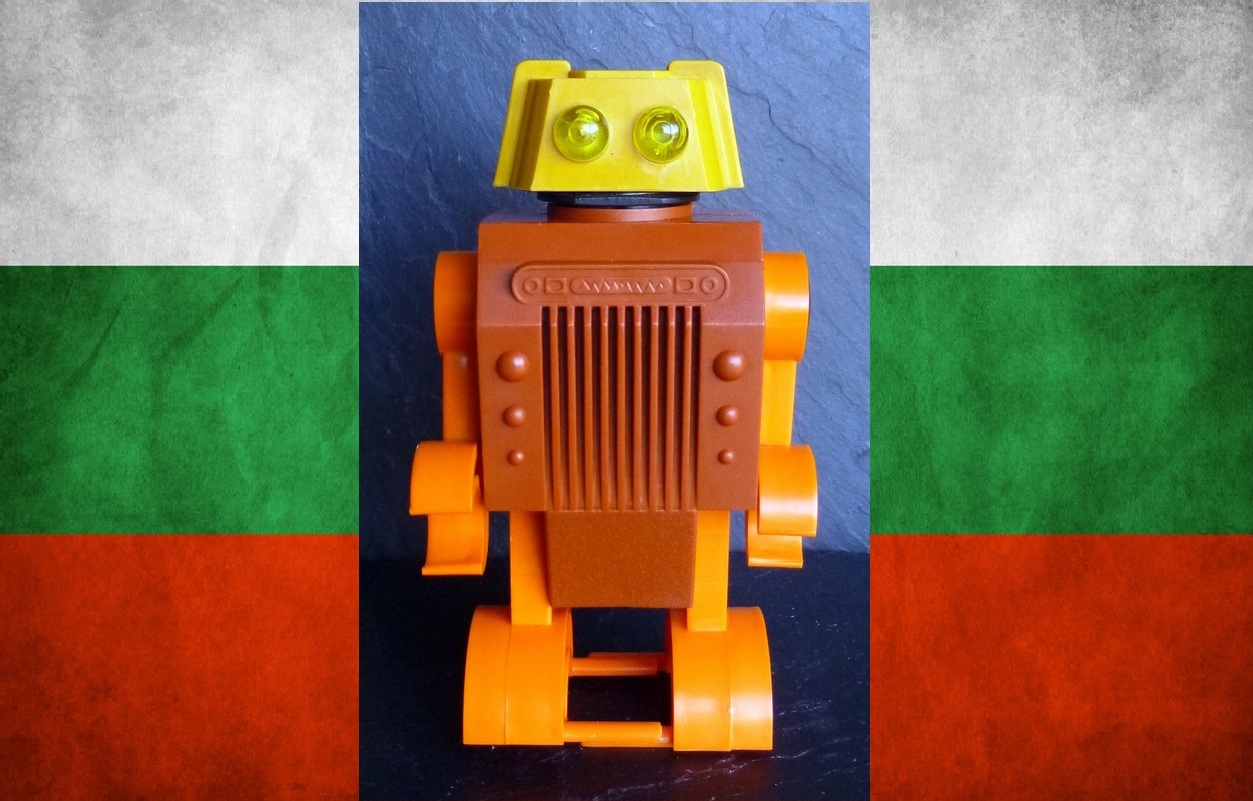
RO 1, the battery-operated Bulgarian toy robot. Made in Silistra c. 1970s-1980.

Isaac Asimov’s three laws of robotics are fairly well-known at this point. But, as Victor Petrov explains in his delightful overview of the Bulgarian Cold War-era technology industry and accompanying science fiction movement, they were far from the final three. Lyuben Dilov, a “towering” figure in Bulgarian sci-fi, wrote The Road of Icarus about an asteroid-derived generation ship, and the ethical quandaries of creating an artificial intelligence in such circumstances: “what is it to be a man when there are so many machines? Thus, Dilov invents a Fourth Law of Robotics, to supplement Asimov’s famous three, which states that ‘the robot must, in all circumstances, legitimate itself as a robot’.”

Others piled on. Nikola Kesarovski, whose short story collection was actually titled The Fifth Law of Robotics, coined the titular law in his story of the same name: “a robot must know it is a robot.” One wonders whether Ronald B. Moore and the other creators behind the Battlestar Galactica reboot were familiar with Kesarovski. Finally, Lyubomir Nikolov rounds out the canon:

In his story ‘The Hundred and First Law of Robotics’ (1989), a writer is found dead while working on his eponymous story, which states that a robot should never fall from a roof. He himself is killed by a robot who just didn’t want to learn any more laws, resulting in the final one: ‘Anyone who tries to teach a simple-minded robot a new law, must immediately be punished by being beaten on the head with the complete works of Asimov (200 volumes)’.

Hopefully, by the time we get to Law 101, we’ll have figured out how to have rendered the techno-nightmares of AI run amok nothing but – dreams.

And all of this is happening against the equally dreamlike, near-fantastical backdrop of Bulgarian modernization and informatization, as Petrov writes:

The Balkan state was, by the 1980s, the Eastern Bloc’s ‘Silicon Valley’, home to cutting-edge factories producing processors, hard discs, floppy drives and industrial robots. It was called ‘the Japan of the Balkans’, producing nearly half of all computing devices and peripherals in the Eastern Bloc…

The Bulgarians surged ahead of their socialist allies through close contacts with Japanese firms and a massive industrial espionage effort. While Bulgarian engineers signed contracts with Fujitsu, state security agents criss-crossed the United States and Europe in search of the latest embargoed electronics to buy, copy or steal. In 1977, a whole IBM factory for magnetic discs based in Portugal was bought by a cover firm and shipped off to Bulgaria; elsewhere, secrets were passed on to Bulgarians by their foreign colleagues through the simple exchange of catalogues and information at conferences and fairs. Scientists back in Bulgaria reverse-engineered, improved, tinkered; soon towns that once processed tobacco were supplying hundreds of millions of customers with computers.

Looming over all of this is the parallel Soviet effort at a socialist internet, the data juggernaut just over the horizon, out of sight. Bulgarian science fiction writes itself; phantom AI purchasers spiriting away entire factories, the detritus of post-industrialization; shadowy deals cut between equity firms, brand consultants, and the organs of state ownership; eldritch information inscribed in the pages of Oriental Trading and on AOL CDs…