Play Up! Play Up! And Play the Game!

“The Battle of Waterloo was won on the playing-fields of Eton.”

– Arthur Wellesley

There’s a breathless hush in the close to-night
Ten to make and the match to win
A bumping pitch and a blinding light,
An hour to play, and the last man in.
And it’s not for the sake of a ribboned coat.
Or the selfish hope of a season’s fame,
But his captain’s hand on his shoulder smote
“Play up! Play up! And play the game!”

The sand of the desert is sodden red-
Red with the wreck of the square that broke
The gatling’s jammed and the colonel dead,
And the regiment blind with dust and smoke.
The river of death has brimmed its banks,
And England’s far and Honor a name,
But the voice of a schoolboy rallies the ranks-
“Play up! Play up! And play the game!”

This is the word that year by year,
While in her place the school is set,
Every one of her sons must hear,
And none that hears it dare forget.
This they all with joyful mind
And bear through life Eke a torch in flame,
falling fling to the host behind-
“Play up! Play up! And play the game!”

– Sir Henry Newbolt

Rational Pessimism

Matt Ridley’s new book about how we’ve got it so good today, The Rational Optimist: How Prosperity Evolves, has met with pretty decent reviews. I only just got around to reading Brendan O’Neill’s review for The American Conservative today (yes, yes, I know it’s dated August 1, but I’ve been busy), and it quashed any desire I might have had to read it.

I mean, I know I’m a pretty ornery cuss, but let’s face it: despite rapid advances in material prosperity, we as a society don’t seem particularly happy with our lot. O’Neill is right in saying that all the threats guaranteed to kill us all – Y2K, Bird Flu, that Man-Bird-Pig disease of a year or two ago – have never materialized, and that despite our constant worrying over the end, if it indeed comes it is almost certain to catch us by surprise.

And yet, there is so much of Ridley’s overall hypothesis that seems to make no sense. At the risk of becoming one of the “angry, graph-obsessed nitpicking” types O’Neill warns against, I think it would make sense to examine Ridley’s actual claims and see why they ring hollow.

In just the past 50 years, the average human “earned nearly three times as much money (corrected for inflation), ate one-third more calories of food, buried one-third as many of her children, and could expect to live one-third longer.”

Right off the bat, I can see one problem here: the average human. While wages and prosperity have risen steadily around the world, in the United States income disparity is at historical levels. Productivity has soared in the past fifty years,  but relative worker pay has dropped precipitously. We’re doing more and getting paid less to do it. So while much of the world may have seen a tangible increase in quality-of-life, we’re in many ways worse off than we were 20, 30 years ago. Continue reading

H.U.D. not C.H.U.D.

In Las Vegas, they’ve gone underground.

Not in the “off-the-grid” sense, nor in any kind of futuristic post-apocalyptic-themed bunker casino (an idea that I have just now patented), but in an actual we’ve-lost-our-homes-and-live-in-a-tunnel way.

An entrance to the tunnels underneath Las Vegas, Nevada.

The population is estimated to be over 1,000. People who have lost their homes and their livelihoods have instead converted the tunnels – both flooded and dry – into their homes, milk crates to keep their things out of the water. The furniture all comes second-hand; they look for new things at night, to avoid unwanted attention – “it’s kind of embarrassing”.

Steven and Kathryn's 400 sq. ft. "bungalow," deep beneath Las Vegas.

There’s a shadow economy at work here, beyond the obvious gray market in housing. For one of the underground dwellers, his source of income is credit hustling for left behind slot chips and jackpots (he claims to have once found $997).  It’s scraps from above, the remnants of a once proud civilization, that sustain this particular mode of urban life. And all the while, one can’t help but channel Taibbi:

With the $13-plus trillion we are estimated to ultimately spend on the bailouts, we could not only have bought and paid off every single subprime mortgage in the country (that would only have cost $1.4 trillion), we could have paid off every remaining mortgage of any kind in this country-and still have had enough money left over to buy a new house for every American who does not already have one.

It’s an unintentional hackerspace – a separation from everyday life borne of necessity, not desire – but nevertheless it achieves some sort of independence.

Can this be taken further? Can our underground and derelict spaces be reused for isolated groups and others who just want to be left alone? Are subterranean environments appropriate for sustained living? Let’s see how long these tunnel folks can go unmolested by the law first.

Meanwhile, in Germany, the “House of Contamination” art exhibit accidentally mocks this way of living.

An aerial shot of a room in the “House of Contamination” installation.

A “life-size maquette of a cultural centre that facilitates cross-fertilisation between the arts?” No, an all-too real representation of modern low living. Perhaps if “House of Contamination” was trying to make a larger socio-economic point. But it appears to just be ‘slumming it’. Read some damn Scalzi.


Kids’ Table No More

President Obama dropped a bombshell and a “guaranteed applause line” on his passage to India: he will back an Indian seat on the UN Security Council.  And quite frankly, it’s about time. The only two countries opposing it were China and the US, so while this doesn’t completely clear the path for Indian accession, it does smooth it.

The other question is how this will remake the Security Council as a whole. Tom Ricks has his own solution:

It also probably is time to kick out France and Britain and instead give the EU one seat, which would make the permanent members:

  • United States
  • Russia
  • China
  • India
  • Japan
  • EU

Japan makes sense, but adding/subtracting members is going to irritate virtually everyone no matter how it’s done (which explains why none of it has been done before).

I think we can agree right off the bat that losing members is a non-starter. No one will voluntarily give up a seat, and thanks to veto power, it’s hard to see France or Britain ruling themselves into irrelevance, no matter how much that might make sense. If they both stay then, why would Germany not deserve a seat? As the largest economy and most populous country in Europe, there’s little reasonable objection to their membership.

Then we get into regional representation. If Russia, India, and China all have a seat, why doesn’t Brazil get one? Or if we go the route of an EU seat, why not UNASUR? And/or the African Union? Will the Middle East get its own seat? Would Pakistan demand one?

It is an excruciating set of compromises that would have to be made in order to change the membership of the Security Council at all. Perhaps the largest barrier, though, is the scale of enlargement. The G8 didn’t evolve into a G10, and then a G12, and so forth – it went straight from G8 to G20. And if the Security Council is to add any of the up-and-coming powers, it will probably have to add them all.

Underground Testing

Recently, France and Britain concluded a defense agreement which, among other things, provides for increased joint nuclear research between the two. In the spirit of that nuclear cooperation – and also in the spirit of getting things done while Congress has their heads up their asses – I have decided to reprint my essay “Underground Testing: Anglo-American Nuclear Cooperation, 1946-58.”

The mushroom cloud over Hiroshima, August 6, 1945.

In 1946, atomic collaboration between Great Britain and the United States screeched to a halt. The fruitful partnership between the ‘Tube Alloys’ team in the United Kingdom and the scientists of the Manhattan Project had grown increasingly one-sided, with the United States’ research contributions far outstripping those of the British by the end of World War II. Two atomic bombs were dropped on the Japanese cities of Hiroshima and Nagasaki in August of 1945, demonstrating the arrival of nuclear hegemony. The British were merely informed of the decision, to which they acquiesced with “little or no debate.”[1] As the technology gap across the Atlantic Ocean continued to widen in the immediate postwar period, Britain was increasingly thrust into a lesser, subordinate role.

With the passage of Senator Brien McMahon’s Atomic Energy Act in 1946, Anglo-American collaboration in the field of nuclear power and weaponry appeared to be at a congressionally-mandated end. Much of Thatcher-era historiography views that collaboration as entirely dormant until the McMahon Act’s repeal in 1958, and that in the meantime Britain forged on as the jilted partner in the ‘special relationship’.[2] While true on an official level, this ignores the underlying reality of close continuing cooperation on atomic weaponry between 1946 and 1958. Nuclear cooperation did not hit a wall in 1946; it merely endured ‘underground’ for twelve years.

Continue reading

Recommended Reading (2010-11-07)

Motorists pass a replica of the Eiffel Tower, on a dusty afternoon, Oct. 21, 2010 in Kabul, Afghanistan.

It’s been a while since I’ve done one of these, but here goes…

An examination of (yet another) dark side to social networking. Seriously, the scariest thing about this loss of privacy is that we’re not losing it, we’re giving it up voluntarily. I’m certainly as guilty as anyone. But is this a Daemon-style false dichotomy – hippie commune or on the grid – or is there a third way?

– The largest collection of scale model terrain belonged to the Sun King himself. Originally used for military purposes, Jeffrey Murray explores what they can tell us today about medieval cities.

– A new project called “FutureStates” asks for – and offers – predictions from luminaries and random users for the next 200 years.

– There are so many compelling reasons to ban the conversion of missile silos for the purposes of missile defense. Here are most of them.

– Grey goo ahead of its time? The singularity at play? Either way, financial bots are responsible for a whole lot of the shit we’ve found ourselves in lately. Financial bots and terrible, terrible people.

– Luc Sante shares my disease: too many books, too little space, too little time.

And from the past week at Automatic Ballpoint:

Britain and France sign an epic defense treaty. Virginia Postrel combined with the 2010 election sets me off on one of my better rants. And North Korea attempts to hurl its technology forward to the 1990s…and beyond?

High Technology in the Hermit Kingdom

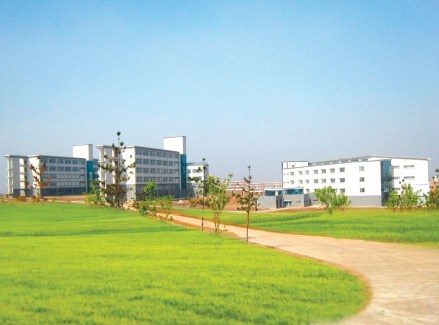
The Main and Academic Buildings at Pyongyang University of Science and Technology.

38North (the US-Korea Institute at SAIS blog) has been producing some fantastic reporting lately, and today came out with an article on the new Pyonyang University of Science and Technology (PUST), which opened in October.

Its very existence is a contradiction in terms. It is a pool of 160 of the best and the brightest computer and engineering students in North Korea, proud graduates of the Kim Chaek University of Technology and Kim Il Sung University. Perhaps most out-of-character for the tightly sealed country, these students will eventually be allowed free access to the internet. At first, only email capabilities will be granted, but eventually their access will open up and students able to venture beyond the Guang Myung internal North Korean intranet.

PUST itself is backed and funded by evangelical Christians, but steps are taken to ensure that no proselytizing takes place on campus. The university is also in negotiations and talks with the Department of Commerce and South Korean agencies, clearing everything from the names of schools to the curriculum itself. PUST’s cooperation is deemed necessary to securing new technology and avoiding dual-use restrictions on tech imports.

School officials have voluntarily cleared curricula with the U.S. government, which has weighed in on details as fine as the name of one of PUST’s first three schools. The School of Biotechnology was renamed the School of Agriculture and Life Sciences because U.S. officials were concerned that biotech studies might be equated to bioweapons studies, says Park. North Korean officials, meanwhile, forbid PUST from launching an MBA program—a degree too tightly associated with U.S. imperialism. “So we call it industrial management,” Park says. “But the contents are similar to those of an MBA.”

The school hopes to have 2,600 students by 2012, visiting faculty, and all the other accoutrements of a successful modern research university. But they will also have some unique challenges to North Korea:

Kim Chaek University of Technology had around 500 Pentium 4’s and 5’s connected to the system. He estimates that nationwide, tens of thousands of computers of all types are now linked in. However, it’s not clear how effective Guang Myung is outside Pyongyang, where clunky routers funnel information to ancient machines—remember 386s and 486s? Another major woe is an unstable electricity supply that regularly fritzes electronics. Lee, who has visited North Korea 15 times, says that when he asks what scientists need most, they request laptops, whose power cord adaptors and batteries can better handle electrical fluctuations.

Signs of openness? An attempt to forcibly drag North Korea into the 21st century? A smokescreen for weapons-grade technology imports? Or just an opportunity to drastically improve the lives of a few lucky North Koreans?

It’s hard to say, on the whole, whether this is a good or bad development. The students attending PUST will have more access to knowledge and the broader world than ever before, and depending on whether their contact with ‘normal’ North Koreans is limited, could possibly spread the gospel of the free world. Then again, developments and breakthroughs made at PUST could very well have military implications, despite all assurances to the contrary (indeed, how could Kim Jong-Il or Kim Jong Un resist?).

If this really “might nudge the country’s tattered manufacturing-based economy toward an information-based economy,” that should be good for North Korea in the long run. But then again, we’re still feeling the agony of our shift from one to the other, and for a country like the United States that transition was not an easy one to make. I suspect it may be even more painful for the DPRK.


Frenemies?

Two age-old adversaries finally joined forces in recognition of their weakened position today. Putting aside the divisions of the past and recalling times when they could reach across and work with each other in harmony, the two parties committed to a radical, unprecedented new arrangement.

No, Charlie Crist didn’t win, and Congress didn’t actually decide to start functioning. Instead, France and Good Britain signed a defense treaty. It’s pretty out there: provisions for a joint expeditionary task force and a timeshare arrangement of their aircraft carriers, which many had speculated on. At least now one will always be at sea, exorcising the specter of a naval aviation-less Great Britain. Also: joint nuclear research! Though not extending to actual issues of deployment, it seems to have supplanted the old Tube Alloys project between America and Britain as the new centerpiece of nuclear partnership.

Still, we have come a long way since the days of Viscount Gort and the BEF. Rule Britannia? Well, co-rule maybe.

A War About Nothing

Seinfeld has already sparked books about nihilism, philosophy, bible study, and sociology, and a website on economics. And now, the ongoing narco-war violence in Mexico:

The Mexican narco-war may be the first real 21st-century war—a war that is, in the end, about nothing. Yes, there are regional and clan identities involved—loyalties of a sort to Tamaulipas, to Michoacan, to Sinaloa—but they are too fluid, too subject to betrayal, for the war to be defined as tribal. Yes, the Mexicans are torturing and killing one another over money and the smuggling routes that provide it, but much of the savagery, as noted, is over the smaller profits of the domestic market, the street corner, the sprawling colonia—savagery perpetrated for little real reward, and mainly for its own sake. Mexico’s war has no single propelling cause, no single objective, and certainly no grand ideology. It is a conflict of a post-political era. It belongs to an age of aggressive hyper-materialism. The drug lords are of course not alone in this. There are “legitimate” corporations all over the world whose only credo is greed and whose only iconic value is “the brand.”

In short, ‘why they fight‘ might be irrelevant. It might not even have a real answer, or a real reason – it is “a war of the digital age, fought as much on YouTube and mobile phones as it is in city streets and backroom torture chambers.” Even if it is a ‘narco-war’, drugs almost seem a byproduct, rather than a means or an end. They might just be another symptom. How do you even begin to combat such a phenomenon? Are there underlying root causes to be addressed?

Or is this just yet another sign of impending systemic breakdown? I’m leaning towards that. It’s sort of a ‘what’s the goddamn point?’ approach, which seems to explain more each day. Better stock up on your Toyota Hiluxes and your Gerber “hedge trimmer” machetes now.