Unintentional Amusement

In the wake of Google’s announcement that they would cease collaborating with the PRC:

China heavily censored the news that Google would stop cooperating with Chinese Internet censorship and consider shutting down its operations in the country.

It’s hard to see how that doesn’t prove a point.

Further Google hijinx: a google.cn image search for Tiananmen Square, and a google.com search for Tiananmen Square. Spot the difference!

Recommended Reading (2010-01-13)

– More on the cringe of the West. The Spiegel‘s Henryk Broder writes of the West as “choked by fear.”

Kings of War has a great article on the nature of “100% readiness” and why it’s an impossible goal. The 7:1 ratio of applicants to recruits who make it through training are just further proof that the risk-averse society is losing effectiveness, even if there’s a point to be made in comparison with American replacements in Vietnam.

Continue reading

Like the Hand of God

If you’ve ever played Call of Duty 4: Modern Warfare, you’ll remember the AC-130 level. It’s even more accurate and realistic than I’d realized (the level could have been even less professional in tone, and still outdone the real-world scenario). It’s also something that was missing from the recent sequel.

Bonus: is Modern Warfare 2 sexist? A girls’ night in determines the answer…

Antisemitism, Dissent, and the LSE

The face of “new antisemitism

Every time I think I’m disgusted by my school, it gets worse. I thought we’d reached a low when the London School of Economics voted to twin (my personal conspiracy is that the vote was scheduled on American Thanksgiving so none of the ‘Israel-loving’ Americans would show up) with the Islamic University of Gaza, which was founded by Ahmed Yassin. If that name sounds familiar, it’s because he also founded a little organization called Hamas.  Aside from hosting Hamas’s R&D program for the Qassam rocket, IUG’s ‘distinguished’ faculty has referred to gays as “perverts” and “morally sick,” and proclaimed the university to be an absolute reflection of Hamas and its philsophy.

Ridiculous as it is, maybe it ends there? Not so fast.

Continue reading

Recommended Reading (2010-01-12)

– Christopher Hitchens asks “WTF?” as the survivor of both Hiroshima and Nagasaki dies.

– From Wired: how the risk-averse society stopped bombing in Afghanistan (except for close-air support, really).

– If you’re a fan of ComingAnarchy, you’ll be pleased to know that Curzon is planning on making a visit to London next week. Open offer to meet up; who’s with me?

– Kazys Varnelis offers predictions for the coming decade. A number of things here, of course, but I think he’s spot on with the dissolving middle class and possible polarization/further fragmentation of the U.S. on a state-by-state basis. However, I think his outlook for suburbia is perhaps a little rosy.

– Socio-economics in Russia may put a stop to change. But would that change be good?

Recommended Reading (2010-01-10) – SUNDAY Edition

The next couple weeks will see some longer link collections than usual (if I remember to do them, that is). So much happens these days…

A nifty little infographic from The Economist on the “global tinderbox” that is the world of 2010. Merry New Year, everyone!

– An amazing story in New York about the self-destruction of John Edwards and the sheer absurdity of the Rielle Hunter affair’s cover-up. The depths and the self-delusion… On a semi-related note, is it possible that the National Enquirer deserves a Pulitzer for first breaking the story?

– Yet another relevant TED talk: ‘how the net aids dictatorships’. Tech enables blowback. And where do you start, when it comes to the internet? With the very alphabet you use to type a URL with.

Continue reading

Military Orientalism: A Review

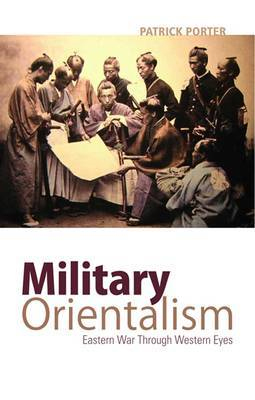
Patrick Porter’s Military Orientalism provides an excellent analysis of the recent culturally-focused bent within western military thinking. “It is not a question of whether culture matters,” writes Porter, “but how it matters, and how to conceptualise [sic] it.” This is expressed through several case studies: British perceptions and accounts of the Russo-Japanese War, interwar military thinking and the “lessons” of Ghengis Khan (particularly as expressed by Basil Liddell Hart), the United States and the Taliban in Afghanistan, and finally Israel’s experience in the 2006 Lebanon War.

Continue reading

…And We’re Back.

Sorry for the incredibly long delay. Between flying, driving, holidays, and snow, I haven’t had much time to post or write much.

I have, however, had plenty of time to catch up on some reading. I finally finished Military Orientalism, and while it seems a bit rushed towards the end, it’s an excellent, insightful analysis that is well worth your time. I’ll have a review up shortly.

Rounding off an excellent Christmas, I received a ton of books for both the holiday and my recent birthday (which I’d otherwise prefer not to think about). The plane ride was enough time to finish Michael Crichton’s new posthumous Pirate Latitudes, which was a great, quick read.  Yesterday I was still on a fiction kick, so I finally got around to Arthur C. Clarke’s Rendezvous with Rama. It’s even better than I had imagined, and my only regret is that I’d put it off for so long.

Currently, I’m in the middle of John Robb’s Brave New War (it’s about time, no?) and Michio Kaku’s Physics of the Impossible.

Other books that I now own and am waiting to dive into:

Marcus Aurelius – The Emperor’s Handbook: A New Translation of the Meditations

Allan Dulles – The Craft of Intelligence

Alistair Horne – The Price of Glory: Verdun 1916

Theodore Roosevelt – The Naval War of 1812

Russell Weigley – The American Way of War

Here’s some food for thought (before an absurdly huge links collection tomorrow): Ray Kurzweil declares solar power on the verge of providing 100% of human energy needs. One more benefit of solar? It’s decentralized and “safe from disaster and sabotage.” No more Iraqi pipelines?


Recommended Reading (2009-12-20) – SUNDAY Edition

A snowy, white day here in New England. Finally some real weather, the kind that makes you feel alive.

– Hugo Chavez’s bellicosity may finally come to a head, the BBC reports. Apparently it’s not just an anti-Bush thing with him; he’s accused Columbia and the United States of preparing to invade. The Venezuelan Army is already blowing up bridges, in all senses of the phrase.

– Everybody still hates everybody else in Iraq. They’re just not killing each other anymore, but turning to politics instead. Kurds will no longer accept “second-citizen status.”

More after the jump…

Continue reading

The Church of Knowledge

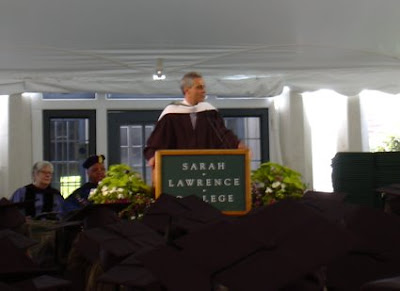
Kevin Carey writes in Democracy Now about the ‘quality’ of colleges in the United States. Comparing higher education to the Catholic church, he describes the modern university as in institution terrified of actually trying to evaluate how well they’re teaching. Answerable to no one, accountable to none, non-profit colleges try to maximize reputation rather than profits, including gaming the U.S. News & World Report rankings. I can speak from experience here: my own undergraduate college was unceremoniously dropped from the list in 2005. This came solely because we stopped looking at S.A.T. scores, which were a quantifiable measure of – I don’t know, something – an ability to take tests, and we were duly punished. Yet, the college flourishes, admission has only grown more selective, and I don’t for a minute think less of Sarah Lawrence for her absence from the USNWR tables.

After moving from the unique style of an SLC education to that of the British university, the biggest difference is in fact the alumni donation/endowment-based system of private American colleges. It seems like a bad idea from the start – too close to a business/consumer model, but not actually responsible in the same way. The British schools can count on receiving their funding from the Exchequer each year; they have the benefit of stability. But it’s in fact the endowment system that allows students to change their educational experience while it’s happening. Schools that rely on alumni donations (especially true for those with smaller endowments) must address the needs of current students, whether they be shortages in the curriculum or draconian alcohol policies. Otherwise they risk losing a lifelong source of income, in a state of even further dependence than a business.

Carey misses this almost entirely: “If bad teaching created negative publicity or materially affected the ability of college presidents to recruit students and raise money from alumni, presidents would have much stronger incentives to tackle reform head-on.” So then, is the problem that the alumni of prestigious schools are all idiots, unable to realize they were fleeced? Not sure how to remedy this.

It could be pointed out that the future alumni donation model merely ensures that the wealthiest students have the loudest voices, but I’d have to disagree. A college doesn’t know who’s going to be wealthy or not down the road. It could produce a world-renowned director/producer or a White House Chief of Staff who majored in dance. It’s the ultimate equalizer, and the inverse relationship between the size of a college and its dependence on alumni donations means that the most supportive, responsive colleges will be the tiny liberal arts ones. The big universities are too big to learn. Lectures tell you, seminars engage you (even if some smart people think otherwise).

Carey’s prescription is for new modeling and quantitative assessments of teaching quality and other intangibles. The problem with this (as with all sociological attempts at structuring human behavior) is that it’s too individualistic and subjective a measurement to boil down to a formula. The NSSE and the CLA, even if accurate, merely tell you how a given college is. What’s truly needed is an instrument to change how that college will be. Students should affect their own destiny.

What it comes down to is a need for decentralizing higher education. Harvard as the Ma Bell of universities?