The current tagline at McSweeney’s was good for a chuckle today:
 So what’s the equivalent of an degree in English?

The current tagline at McSweeney’s was good for a chuckle today:
So what’s the equivalent of an degree in English?
Back in April, I wrote about emerging patterns of urban warfare and the new surveillance state that continues to grow in modern cities. Much of what I wrote was inspired by Geoff Manaugh’s amazing work at BLDGBLOG, but also by Stephen Graham’s new book Cities Under Siege: The New Military Urbanism. If that sounded interesting to you and you’ll in be in London next week, some great news:
Cities Under Siege
LSE Cities Book Launch
Date: Monday 7 June 2010
Time: 6.30-8pm
Venue: Sheikh Zayed Theatre, New Academic Building
Speaker: Stephen Graham
Respondent: Gareth Jones
Chair: Dr Fran TonkissCities have become the new battleground of our increasingly urban world. From the slums of the global South to the wealthy financial centres of the West, Cities Under Siege traces how political violence now operates through the sites, spaces, infrastructures and symbols of the world’s rapidly expanding metropolitan areas. Drawing on a wealth of original research, Graham shows how Western and Israeli militaries and security forces now perceive all urban terrain as a real or imagined conflict zone inhabited by lurking, shadow enemies, and urban inhabitants as targets that need to be continually tracked, scanned, controlled and targeted. He examines the transformation of Western militaries into high-tech urban counter-insurgency forces, the militarization and surveillance of March international borders, the labelling as “terrorist” of democratic dissent and Politics/Geography protests, and the enacting of legislation suspending “normal” civilian law.
But best of all…
This event is free and open to all with no ticket required. Entry is on a first come, first served basis. For more information, email d.tanner@lse.ac.uk.
I cannot wait. See you all there.
And by paradise, I of course mean NATO. Turkey has called an emergency meeting of the North Atlantic Treaty Organization in order to discuss the recent Israeli attack on the Gaza-bound flotilla. It’s a fairly routine response to such an event, except for what it might actually mean for the alliance and for Israel. As a refresher, Article Five of the treaty:
The Parties agree that an armed attack against one or more of them in Europe or North America shall be considered an attack against them all and consequently they agree that, if such an armed attack occurs, each of them, in exercise of the right of individual or collective self-defence recognised by Article 51 of the Charter of the United Nations, will assist the Party or Parties so attacked by taking forthwith, individually and in concert with the other Parties, such action as it deems necessary, including the use of armed force, to restore and maintain the security of the North Atlantic area.
Now, consider Article Six – and keep in mind that one of the flotilla ships, the MV Mavi Mamara, is Turkish-flagged:
For the purpose of Article 5, an armed attack on one or more of the Parties is deemed to include an armed attack:
[…]
- on the forces, vessels, or aircraft of any of the Parties, when in or over these territories or any other area in Europe in which occupation forces of any of the Parties were stationed on the date when the Treaty entered into force or the Mediterranean Sea or the North Atlantic area north of the Tropic of Cancer [emphasis mine].
There is a whole world of possibility here, virtually none of it good. Whatever the justification is for Israel’s actions, it’s clear there are going to be consequences, the severity of which have yet to be determined.
Unfortunately, I cannot recall the exact source I saw this in (if you know it, remind me), but if there was an “international aid flotilla” steaming for Turkey with its supplies bound for the Kurds, would Ankara act much differently? It’s a good point – but the current membership of NATO renders such a hypothetical mostly irrelevant.
This could very well mean the beginning of the end for the Atlantic alliance. It will at least pose a serious dilemma in terms of composition. After all, who right now is more aligned with policy and public sentiment in Europe: Turkey, or America?
Regardless of what the true story is with the Israeli interception of a Gaza-bound flotilla, all sides and interested parties will take away from it what they want to. Much like the al-Durrah incident in 2000, the flotilla intercept will be used a prism through which any side can view the conflict as a whole.
For instance, the earliest reports that were unable to describe anything more detailed than Israelis boarding the flotilla and killing ten implied a massacre for which Jerusalem was directly responsible. But already video has come out with the true nature of the “peace activists” revealed (via Information Dissemination):
Of course, this in no exonerates Israel of responsibility for the raid in the first pace. If nothing else, this was a public relations catastrophe that could easily spark a third intifada. And it’s hard to see how the result couldn’t be predicted on either side. Galrahn calls it a given:
It is hard for Americans to draw any analogies, because we don’t have a relationship like the one between Israel and Palestine.
But if 1000 people from Mexico, whom our government presumed was mostly made up of drug cartel supporters, tried to sail into San Diego with the expectation of running the blockade of the Coast Guard and creating a political demonstration through confrontation – I assure you the odds of people getting killed would be pretty high.
Just like they were in this situation.
Either the flotilla itself was an intentional provocation – or not. It really does push the limits of the imagination to assert that no one had any idea a flotilla like that would possibly provoke Israel. But as Abu Muqawama explains, it’s Israel that should have had an even clearer idea of the possible consequences:
But for the sake of argument, and putting ourselves in the shoes of an Israeli naval commander, let’s assume the most malevolent of motivations for the people participating in the peace flotilla. If I am in charge of doing that for the Israeli Navy, I am going to assume these people are smart and are deliberately trying to provoke a crazy response from my sailors and soldiers that will produce ready-for-television images that both isolate Israel within the international community and further raise the ire of the Arabic-speaking and Islamic worlds. I mean, that is my base assumption for what this group is trying to do. So naturally, the last thing I would want my forces to do would be to overreact, right? [emphasis in original]
One need not assign blame to anyone in order to see this as the colossal fuckup that it is. As usual, absolutely no one wins this game.

A LibCon unity government poster from the National Coalition Government of 1940-45.
Much as I despise the term ‘statism’, which like ‘socialism’ has been overused into a meaningless oblivion, you’d be hard-pressed to find a more suitable term for the Labour Party’s approach to governing Britain. For better or worse, Labour’s solution to just about every problem that popped up between 1997 and 2010 involved some kind of state intervention.
Most troubling (to my mind) has been the encroachment on civil liberties as evidenced by the dramatic rise in CCTV and the extrajudicial legal system created by various anti-terrorism acts since 9/11. The absence of handgun-bearing police officers has merely softened the gradual, insidious reach of the government. Thankfully, that era may be coming to an end.
The fledgling Liberal Democrat-Conservative coalition government has a number of fundamental disagreements, but one of their shared values is that of civil liberties, and gradually they aim to begin rolling back the state (Guido Fawkes would also like to see the Labour Party crushed for all eternity, but that’s not a preordained outcome). None of the Labour policies have been making us any safer, and it seems like this country is coming around to that conclusion.
Nick Clegg, the Deputy Prime Minister, will shepherd a “Great Repeal” bill through the House of Commons. Under the bill, the National ID Card program will be scrapped. A whole host of other Labour programs are due to be severely curtailed if not outright canceled, including DNA retention, anti-terror laws, databases, and the omnipresent CCTV. Details include:
:: New legislation to restrict the scope of the DNA database, probably reducing the length of time innocent people’s details are held to three years as is the case in Scotland.
:: Changes to ensure members of the public can protest peacefully without fear of being branded a criminal.
:: Overhaul draconian and unpopular counter-terrorism laws to strike a fresh balance between protecting the public and civil liberties.
:: New laws to better regulate the use of CCTV, particularly by local authorities and to ensure internet and email records are only stored when necessary.
It’s a good start.
The attack of the other day is starting to get a little bit of play in the press. They all insist on characterizing it as a “brawl,” however. Last I checked, eight versus two is more of a beating.
The Guardian praises Gaddafi as a reformer, and as that paper now routinely does, causes me to throw up a little in my mouth. The Evening Standard is a little more even-handed, but still fails to distinguish between the attackers and the victim. Most accounts, though, like the AP’s, focused entirely on Gaddafi’s non-answer to the question asked him about the Lockerbie bomber. “He is very sick,” was all he replied.
Last week, Russian defense firm Concern Morinformsystem-Agat announced it had designed a clever new launch system for cruise missiles: the Club-K. Designed in the form of a standard shipping container, the missiles can then be launched from essentially anywhere: on a train, from a ship, from a tractor-trailer in the middle of nowhere. They use satellite guidance systems. And in case this seemed like yet another cute idea the Russians had, the system makes use of the 3M-54TE, 3M-54TE1, and the 3M-14TE missiles – all of which are tested and proven. The missiles come in two flavors: anti-ship and anti-ground.
This is naturally troubling on a number of levels, though actually not quite so many as one might imagine at first glance. The most immediate concern is that this particular style of camouflage allows a merchant ship to carry enough firepower to knock out an aircraft carrier – a continuation of asymmetric warfare at sea that Robert Gates has been acknowledging quite a bit recently. Asymmetric threats in general stand to gain the most from this weapon; the sheer banality that the missiles are hidden behind (the container looks so normal) is a clever disguise. Watching that video definitely provokes one of those “why didn’t I think of that?” moments.
Iran and Venezuela are already lining up to purchase the Club-K, and others will soon follow suit. Of course, Venezuela is a highly overrated security problem, but the threat posed by the Club-K is not existential; but one of harassment and annoyance. Iran, on the other hand, poses a clearer danger both itself and through intermediaries. And as Al Sahwa points out:
While it is true that al Qaeda won’t buy this weapon system from CM-AGAT out right, I think we have to recognize that nations like Iran have no qualms in providing groups like Hamas and Hezbollah weapons. The primary limiting factor for a terror organization utilizing this system is most likely the satellite navigation system. A non-Nation State organization would probably need access to a Nation State’s satellite infrastructure, although this is strictly a personal assumption.
However, seeing as some of the weakest links in American border security are the ports, we’re at huge risk there. Is it just me or does the Club-K look like it could also be a toy for eccentric billionaires?
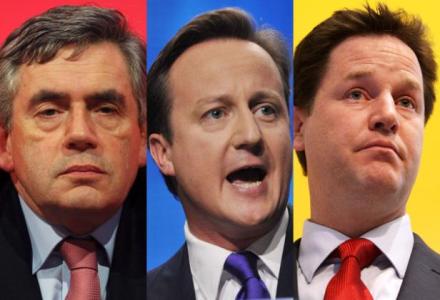
There’s an interesting debate going on over at Harry’s Place as to which British political party has been and would be most conducive (or accommodationist, if you like) to the ‘Special Relationship’. “Norflondon’s” article, in particular, claims that Labour is the “true Atlanticist party.” I would have to disagree.
If you take the three major personal relationships throughout the twentieth century, you have FDR and Churchill, Jack and Mac, and Reagan-Thatcher. All three Prime Ministers were Tories and two of three Presidents Democrats.
This is not meant to imply that the most fruitful partnership would necessarily be Obama-Cameron (i.e. a Democrat and a Tory), but rather that Labour has until recently never been a particularly stalwart half of the Special Relationship. Indeed, America was rather fearful when Clement Attlee and Labour came into power – they were seen as ‘red’ socialists, and socialism was naturally a bad thing (a contemporary cartoon by David Horn in the Evening Standard showed Attlee surrounded by a circle of U.S. Congressmen all asking themselves “no hooves? No tail”)?
The article mentions the Major Government and divides over the Balkans , but considering that was a highly contentious debate within the Clinton Administration itself – not to mention a low-risk bombing campaign – the absence of British support wasn’t seen as a low blow in the same way that say, the Wilson Government’s silence was in Vietnam. Then, of course, there’s Major’s wholehearted British contribution to the first Gulf War.
The change could be pinned on Blair and New Labour, but also keep in mind the nature Blair-Clinton relationship: new center-left incarnations of their old selves.
However, when it comes down to it, does the United States really want a Blairite United Kingdom as part of the special relationship? Patrick Porter has made this point much more eloquently than me; he reminds us of Britain’s pretensions to Great Power status, but then points out the absurdity of Britain trying to do so much:
Geography comes up in the Strategy, but only in a perfunctory and generalised way. It asserts that Africa matters wherever there is extremism or violence, not a very discriminating test; Eastern Europe matters because Britain is engaged there; the Middle East matters because it is central to security and ‘totemic’ to extremists, and Afghanistan-Pakistan for its links to domestic terrorism. Central Asia, Eastern Europe, large chunks of Africa and the Middle East: these four spheres would strain a superpower, let alone Britain.
If at least a portion of an alliance is for figuring out what’s best for an individual country, isn’t the New Labour approach of ‘America first, British national interest second’ pretty bankrupt at this point? Prime Ministers in the past have easily subordinated their Atlanticism to the national interest of the United Kingdom – Thatcher being a notable example – but the times the call for spartan budgets and austerity measures, and those will have to translate into defense cuts as well.
Sadly, I don’t know which prime minister would be the most healthy combination for the Special Relationship and the United States. Perhaps Britain itself must reduce it to no more than a ‘special partnership.’

Well, um, whoops. Not so much the teabagging type, but rather “a Connecticut man, a naturalized United States citizen from Pakistan” named Faisal Shahzad.
So yes, mea culpa. Though the white guy in his 40s remains a ‘person of interest’, clearly he’s not the focus of the investigation, and for that I apologize. But I do think we’re overdue for a reckoning with the enemies of a domestic variety, as all the commentary spouted that subtly sympathizes with them might even serve to legitimize their cause. It certainly increases the likelihood of a right-wing Times Square bomber, though there probably aren’t enough government buildings there to hold their interest for long.
Michael Sheehan has a perfect analysis of this in the New York Times, as well as suggestions on how to stave off ‘lone wolf’ or ‘home grown’ terrorists:
Law enforcement has to focus on preventing sophisticated terrorist organizations from establishing a presence within the United States. The good news is that we know how to do this. The bad news is we aren’t doing it enough. No other American city even attempts to do what New York has accomplished.
[…]
For society as a whole, paying for a handful of detectives at the local level is far more efficient than spending billions inside the Beltway on bloated bureaucracies and large-scale defensive measures that will most likely have little practical effect. And while issues of civil liberties are important, they can be managed with close legal oversight of terrorism investigations.
Attacks won’t come from the center, but from the fringes. You can’t centralize national security, nor can you completely disperse it.
Until then, keep following. And keep following afterward. Remain vigilant.
New development from the ongoing Times Square car bomb story:
Police and federal agents on Sunday were reviewing surveillance footage that shows a possible suspect in the failed Times Square car bombing, describing him as a white man in his 40s who was walking away from the area where the vehicle was parked, looking furtively over his shoulder and removing a layer of clothing, officials said [emphasis mine].
Is it possible that the poorly-veiled, separatist, militia-oriented, violent uprising-style rhetoric of the ignorant sectors of the right has taken root? In case you need a reminder:
The 18 percent of Americans who identify themselves as Tea Party supporters tend to be Republican, white, male, married and older than 45 [emphasis mine].
One nut begets another. Black swans on the horizon…
 Automatic Ballpoint